How To Stop Wedding Stress From Wrecking Your Relationship

Weddings should be a celebration of love but all too often they can actually worsen the relationship. I know this first hand - I almost called off our wedding because the stress was really getting to me and affecting our relationship negatively. That’s because, in their modern incarnation, they’ve become major events and tremendously difficult to organize. There are so many expectations and things that you need to do.


The good news is that there are now a bunch of tried-and-test techniques out there that couples can use to bust wedding stress and just have a great day. Here’s what to do:


Prioritize What Matters


Before you begin planning your wedding, prioritize what matters to you, and what doesn’t. Ask yourselves whether you’re going to nitpick every detail or just have a basic wedding. If you set expectations early on, it helps to set the tone for the rest of the process. 


Some couples split wedding tasks into “must-have” and “nice to have.” This way, they have a better understanding of what is truly important to them, and what doesn’t quite matter as much.


Communicate More Effectively


According to research, lack of communication is the main issue driving wedding stress (and, interestingly, not just a lack of communication between the partners). In many cases, failure to communicate with the parents and other siblings drives conflict. 


According to wedding planning experts, communication is everything. Family arguments can easily erupt when people don’t effectively communicate with each other. Even small things can hurt their feelings, causing tensions and even fighting between the couple themselves. 


Offload Some Of The Responsibility To Vendors


Many couples believe that they need to be CEOs of their own weddings, planning everything out with military precision. However, those that experience the least stress always delegate. 


For instance, you don’t have to micromanage your photographer. As Matt Birchall Photography points out, professionals can simply follow your brief and implement it throughout the day. They don’t require constant oversight. 


If you're struggling to cope with the sheer number of people involved in your wedding, then you might want to hire a wedding manager. These professionals take responsibility by liaising with all relevant parties on your behalf, freeing you up to simply enjoy the day. 


Have A Plan B

wedding flowers arch

Unsplash - CC0 Licence

Weddings can be super stressful if you only have a plan A. That’s because there is no guarantee that things will work out how you intend. For example, it’s common for outdoor weddings to get rained off, even in the summer. If you have nowhere else to go, the entire event could be a washout. 

Spend Time On Self-Care



black and white beach photo

Unsplash - CC0 Licence

In the run-up to the wedding, you can lose track of self-care. There’s just so much to do and think about that it becomes almost impossible to find time and space to focus on just you. 

Spending time on self-care, though, is essential. If you don’t, it can result in reduced libido, headaches, and even a reduction in your appetite. Some people even lose their hair over wedding stress: not a good look for the big day. 

Therefore, spend some time unwinding every day. Don’t allow wedding planning to dominate all your thoughts. 
Four Ways to Take Care of Your Mental Health

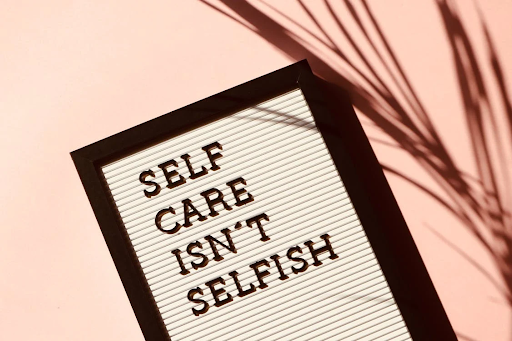
Photo by Madison Inouye from Pexels: https://www.pexels.com/photo/self-care-isn-t-selfish-signage-2821823/

I’ve struggled with my mental health for many years and learning how to take better care of myself is key! look after our mental health. Good mental health can help us feel better, be more productive at work and cope with everyday stresses in a more positive way. When we are feeling down and our mental health isn't at its best, things can seem more stressful and difficult. It’s impossible to be at your 100% every day of your life, which is why it's important to pay attention to how you are feeling and implement new strategies when you are feeling down. 

Below we look at four ways to look after your mental health. 

Ask for help 

One of the key ways to help support your mental health is to ask for help when you need it. Never be afraid to turn to your friends or family members when you are feeling down to ask for support. If you are suffering from some trauma, it could be worth speaking to an expert to help your mental wellbeing. Things like rapid resolution therapy are there to help you through traumatic experiences. There are also helplines you can call that operate 24/7. As they say, a problem shared is a problem halved and by simply sharing it with someone else can make a big difference. 

Keep active 

Being active is very important for not only your physical health but also your mental wellbeing. Aim for at least 30 minutes of moderate exercise a day and you’ll feel the difference. Moderate exercise can be anything from a brisk walk to swimming or going for a bike ride. If you enjoy sports, why not join a sports team as this can be more motivational. Reach out to your friends and family members as they may join you when you are getting active. 

Remember to take a break 

If you are overworking yourself you will start to feel fatigued and chances are your sleep pattern and diet will not be at its best. All of this will contribute to your mental health slipping. Remember it’s important to take breaks from work and to just relax. Spend time with your family and friends or go away for a week. Forgetting about the hustle and bustle of everyday life and switching off can have a real positive impact on your mental health. 

Maintain a balanced diet

Another area of your life to pay attention to when looking after your mental health is your diet. What you eat can have a big effect on how you are feeling on a day to day basis. Unhealthy food like junk food can make you feel sluggish whereas fruits and salads can help you feel more energised. Try to eat the recommended five pieces of fruit and vegetables a day and if you can reduce your alcohol intake. 


What do you do to look after your mental health? Are there any points you would like to add to the above list? Have you tried to make any changes to your daily routine recently that you think would benefit our readers? Let us know in the comment box below. 


5 Simple Ways To Boost Your Confidence

woman smiling looking away

Have you ever met someone superiorly confident and felt a mix of jealousy and admiration? You’re not alone if you do. There is something admirable about those who are overly confident, and it’s something that most of us want to emulate. Confidence is hard to come by in a world of constant digital overexposure. Self-confident people face their fears head on most of the time and they don’t allow them to overwhelm. Knowing how to do this? That’s going to take some time and it’s not easy at all. 

It would be amazing to have that kind of self-confidence, and it can be achieved. With self-reflection, self-love and - in some cases - a smile makeover, you can up your confidence and make sure that you are feeling wonderful about yourself on the inside as much as the outside. Low self-confidence isn't something that you have to deal with forever if you don't want to. You can make changes and improve the way that you feel about yourself, and we’ve got five ways that you can do it.


Remove the negativity. It’s not always easy to do it but if you know you have some negative influences in your life, then it’s time to step away from those. Even if those negative influences are people, you have to let relationships that no longer serve you, go. You can focus on being as positive as possible, and while that’s not always easy to do you have to work at it. If you are feeling that negativity from yourself, see a therapist and get through it with their help.

  1. Adjust your body language. The way you carry yourself impacts your confidence massively. Stand and sit in ways that make you feel like you are deserving of something amazing. Posture, eye contact, and even your smile can come into play and make you feel more confident. Boost yours with the help of adjusted body language and an improved body image, and when you do you will be able to feel much better about yourself.

  2. Embrace failure. You’ll see so many guides telling you that failure isn't an option. You don't have to accept it, but you can embrace it in a way that allows you to learn from your mistakes. Mistakes made can help you to improve, and if you see them as an asset, you’re going to do so much better as a result. 

  3. Prepare yourself. Everything you do has a lesson and you can boost your confidence if you prepare yourself day today. If you hate your teeth but hate the dentist more, prepare yourself to see one with professional help! 

  4. Make a list. When everything else fails one of the best ways to improve your confidence is with a list. Make a list of all of your achievements and your accomplishments and you’ll see very quickly just how much you have to love in your life. 

Boosting your confidence is going to help you to manage your happiness day today - why not start with these tips.


#ThisIsOurShot Choosing the COVID-19 Vaccine for My Family

Thank you American Academy of Pediatrics (AAP) for sponsoring this post. 

The last two years have truly been life-altering for us all, especially as a parent. As a country, we made huge adjustments to our lives, while also attempting to maintain some sense of normalcy for ourselves and our children. The pandemic life has consisted of wearing masks, social distancing, virtual learning, working from home, grocery deliveries, outside play for the kids and so much more. If I can be completely transparent for a moment, outside of the life adjustments I just listed, I, nor my family have been directly impacted until both my husband and son, who are both extremely high-risk, contracted COVID-19, in 2021. This was completely eye-opening for me - especially since we felt we were in the clear having avoided it in 2020.


While my husband and son were recovering, I began thinking of ways to keep my entire family safe. It was important that all my children were given the chance to thrive without worry of infection; especially, my middle daughter, who has a developmental disability, attention deficit disorder/hyperactivity disorder (ADHD). She is a true socialite that enjoys being around other children and people in general. I did not want to dim her light. As her mom, I felt it was my duty to provide her with the freedom to continue to enjoy life, have stress-free playtime, and have safe contact with others. But, I knew this level of protection would go beyond what I could provide as her mother.


Children with ADHD were one of the groups hit the hardest due to the pandemic. They thrive in familiarity and social settings. Taking that away from them was tough. My daughter struggled with adjusting to virtual learning and mask-wearing. Most days it made her symptoms worse.


So, I sprang into action! I scheduled a consultation with her doctor to discuss the COVID-19 vaccines for children. I had questions and lots of them. I needed to know the risks and how it would affect her. Not only did I listen to our pediatrician, I also did the research for myself with trustworthy and reliable information sources, like the American Academy of Pediatrics. I quickly learned that the COVID-19 vaccines would be a great way for my children to continue living active lives. My oldest (13) and my middle daughter (8), who has ADHD, would join the millions of kids and teens who have already been safely vaccinated. And let me tell you, it would not be long at all before the decision was made. After speaking with her doctor and conducting research through authentic sources, I knew the COVID-19 vaccines are the best way to protect children with developmental disabilities from COVID-19.


Choosing to vaccinate was the right choice for our family. I find comfort in knowing that she is able to enjoy playtime in the park, trips to our local farmer’s market, the library close to our home, and events held within the city. My daughter is absolutely fearless! The vaccine was given in two parts just like the adult version. She experienced mild symptoms such as a sore arm and headache - all completely manageable and worth it in the long run. 


Parents, if you are considering protecting your children with developmental disabilities from COVID-19, know that COVID-19 vaccines are continuously monitored for safety! Remember to only trust verified sources, and feel free to speak with your child’s doctor for clarity. Most importantly, learn from my experience that vaccines are safe and protect children with disabilities!